“Millennium Fire”: International Peace Declaration Signed in Moscow and PAX TECUM Awards Presented
“Millennium Fire”: International Peace Declaration Signed in Moscow and PAX TECUM Awards Presented
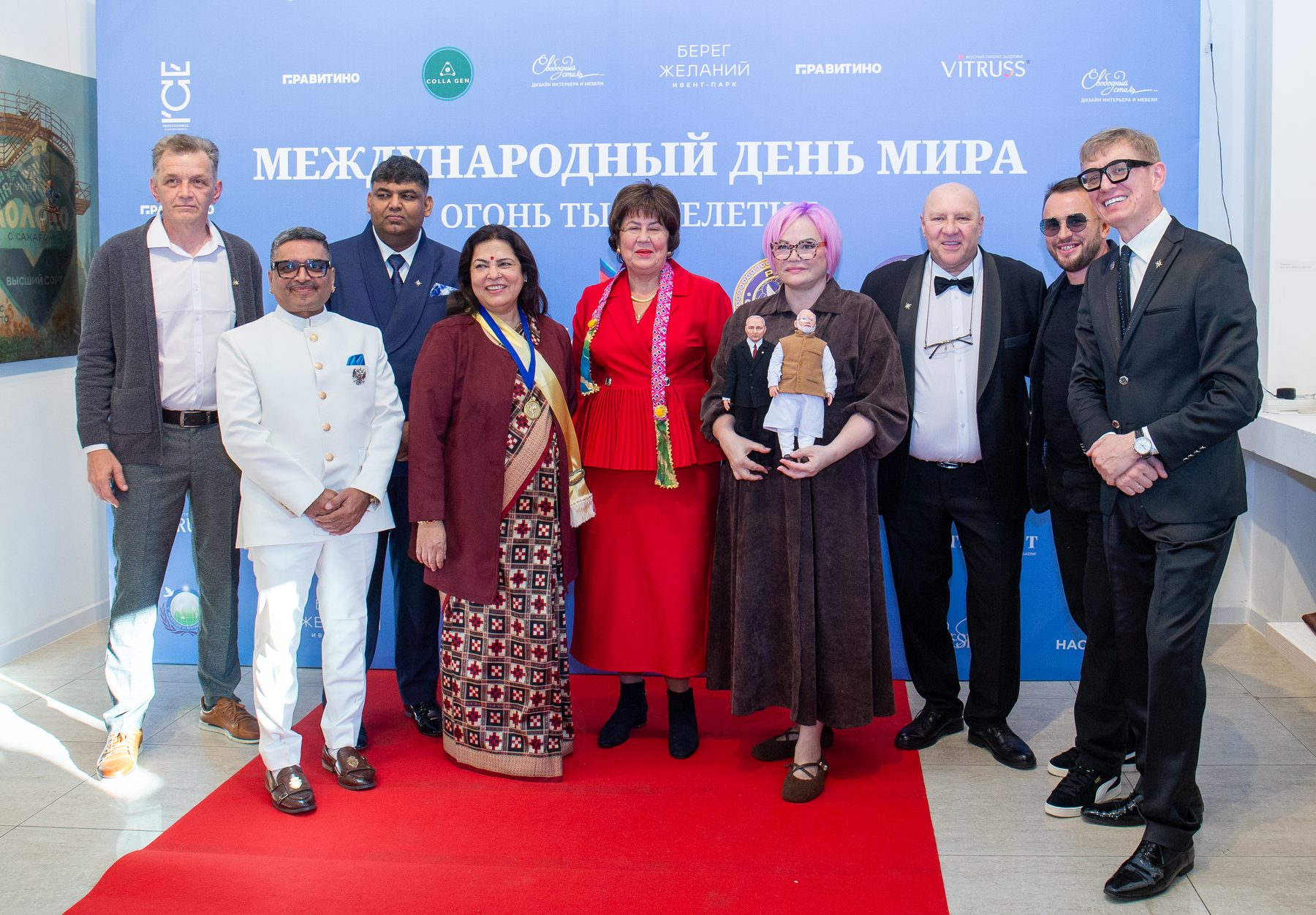
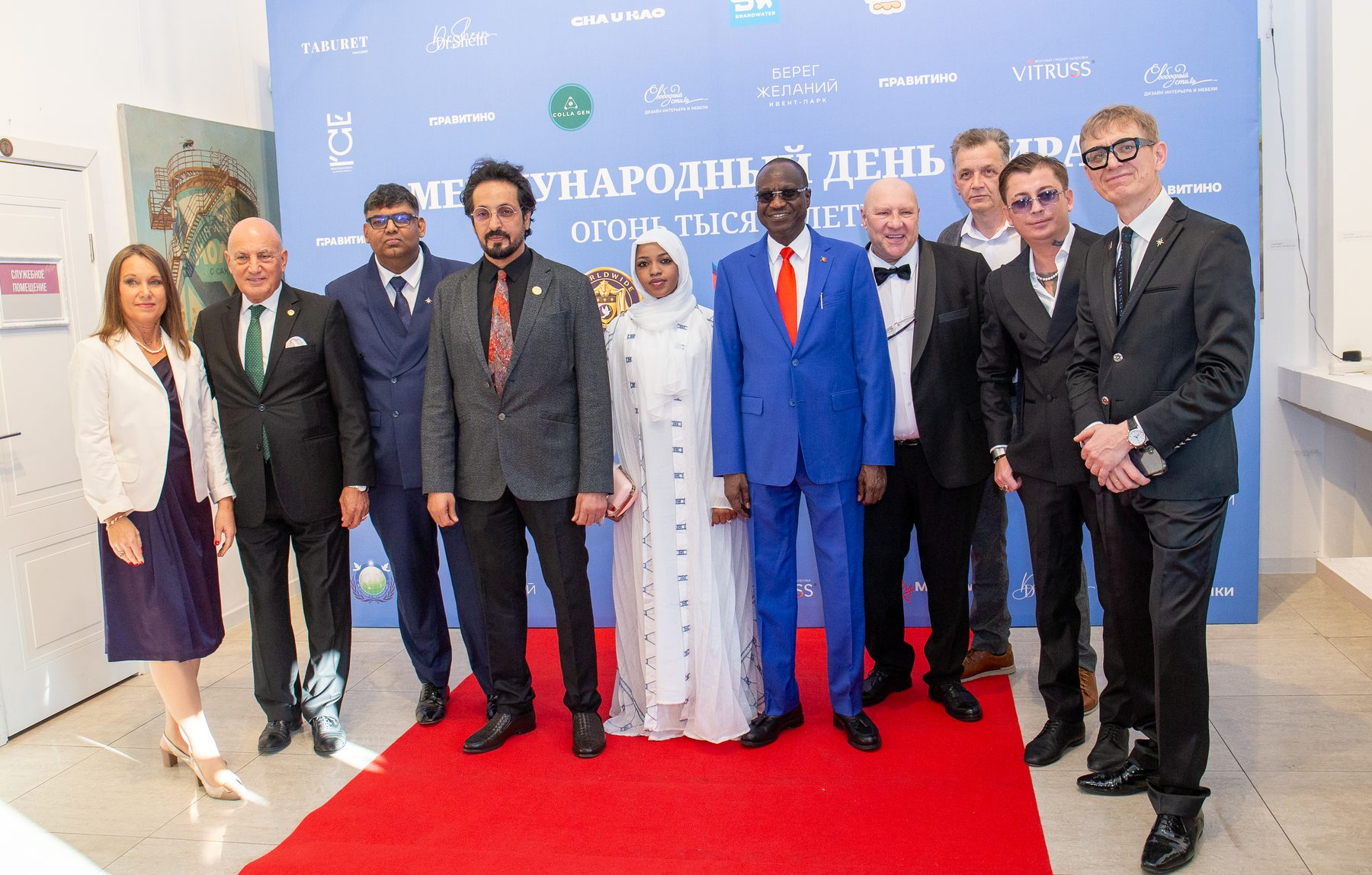
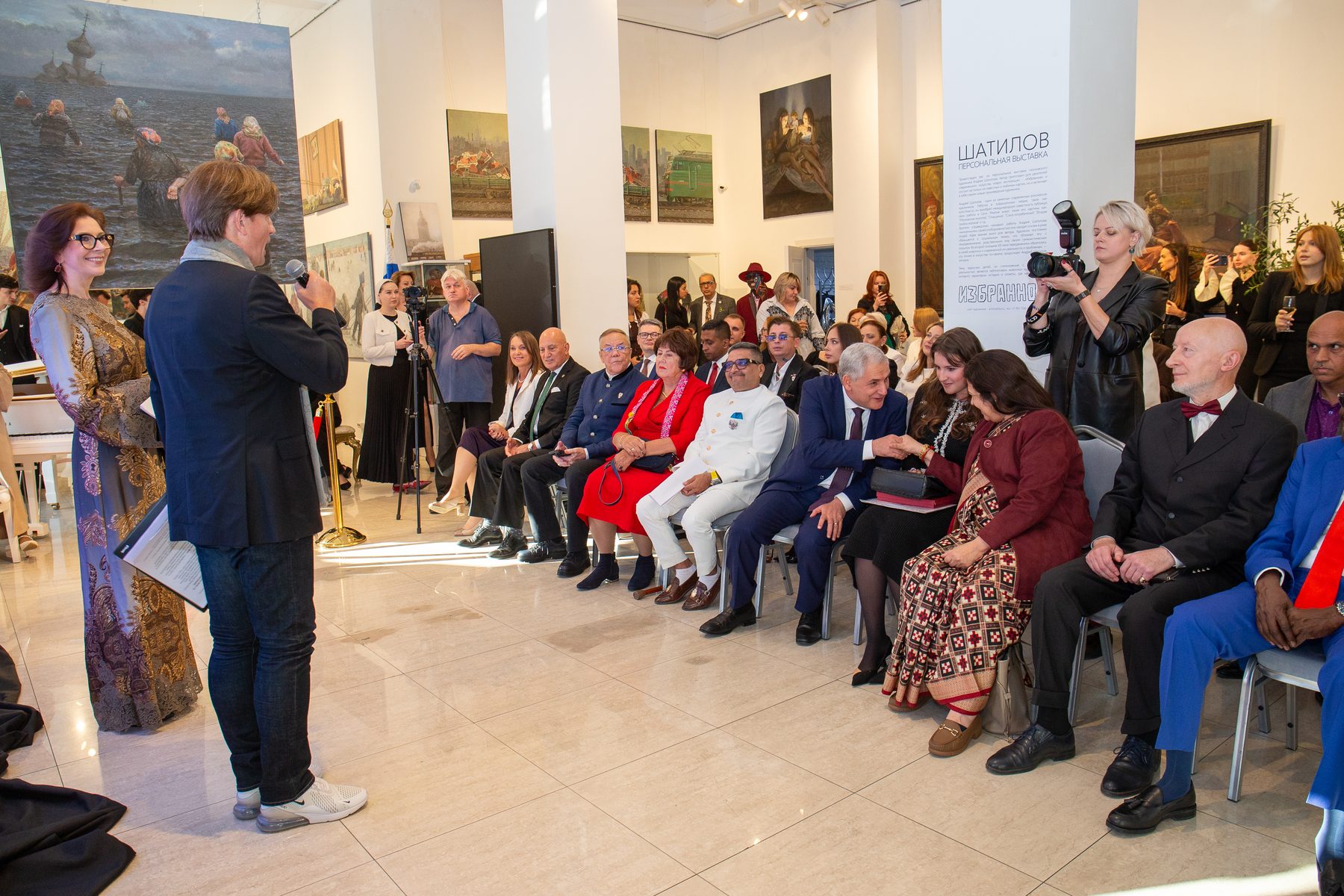
On 20 September 2026, on the eve of the United Nations International Day of Peace, Moscow hosted the international forum “Millennium Fire for Peace and Spiritual Progress.” The gathering brought together diplomats, cultural figures, educators, representatives of business, civil society and international organizations. Among the central events were the signing of an international declaration addressed to the leaders of the BRICS countries and a ceremonial presentation of PAX TECUM awards by the Worldwide Charitable Alliance “Peacemaker.”
The forum took place at the Stolitsa Art Gallery in Moscow and was organized on the initiative of The Times of Russia together with the Worldwide Charitable Alliance “Peacemaker.” It brought together representatives of diplomatic missions, culture, the arts, public organizations, education, business and international cooperation initiatives.
Held immediately before the International Day of Peace, the gathering carried particular symbolic significance.
Its participants came together not only to discuss contemporary international tensions, but also to ask a broader question:
What kind of world do we want to build for the future?
From dialogue to declaration
The principal outcome of the forum was the signing of the declaration:
“Millennium Fire for Peace and Spiritual Progress — An Open Appeal to the Leaders of the BRICS Alliance.”
The document was prepared by an international group representing public, cultural and diplomatic spheres.
Those involved in its preparation included Yuri Safronov, Secretary General of the Worldwide Charitable Alliance “Peacemaker”; Dr. Jaan Nissar Lone, Global President of the BRICS Culture Media Forum; Professor Sergey Shurygin; Sheikh Salem Almazaini; and Ashish Deep Verma.
The philosophical inspiration behind the initiative was Dr. Sergey Dvoryanov, who presented his vision of the spiritual foundations of sustainable peace.
The declaration reflects the idea that lasting peace cannot be achieved solely through political agreements or economic mechanisms.
It also requires cultural dialogue, responsibility, respect, education and recognition of shared human values.
Moscow as a space for international dialogue
The forum brought together representatives of diplomacy, culture, civil society, the arts, design, business and international organizations.
This diversity reflected a broader understanding of modern peacemaking.
Peacebuilding today is no longer the responsibility of governments alone.
Culture matters.
Education matters.
Media matters.
Business and civil society matter.
And direct human relationships between representatives of different countries matter.
When people from different cultures and professions meet face to face, international relations cease to be an abstraction.
They become a human conversation.
Diplomacy and education
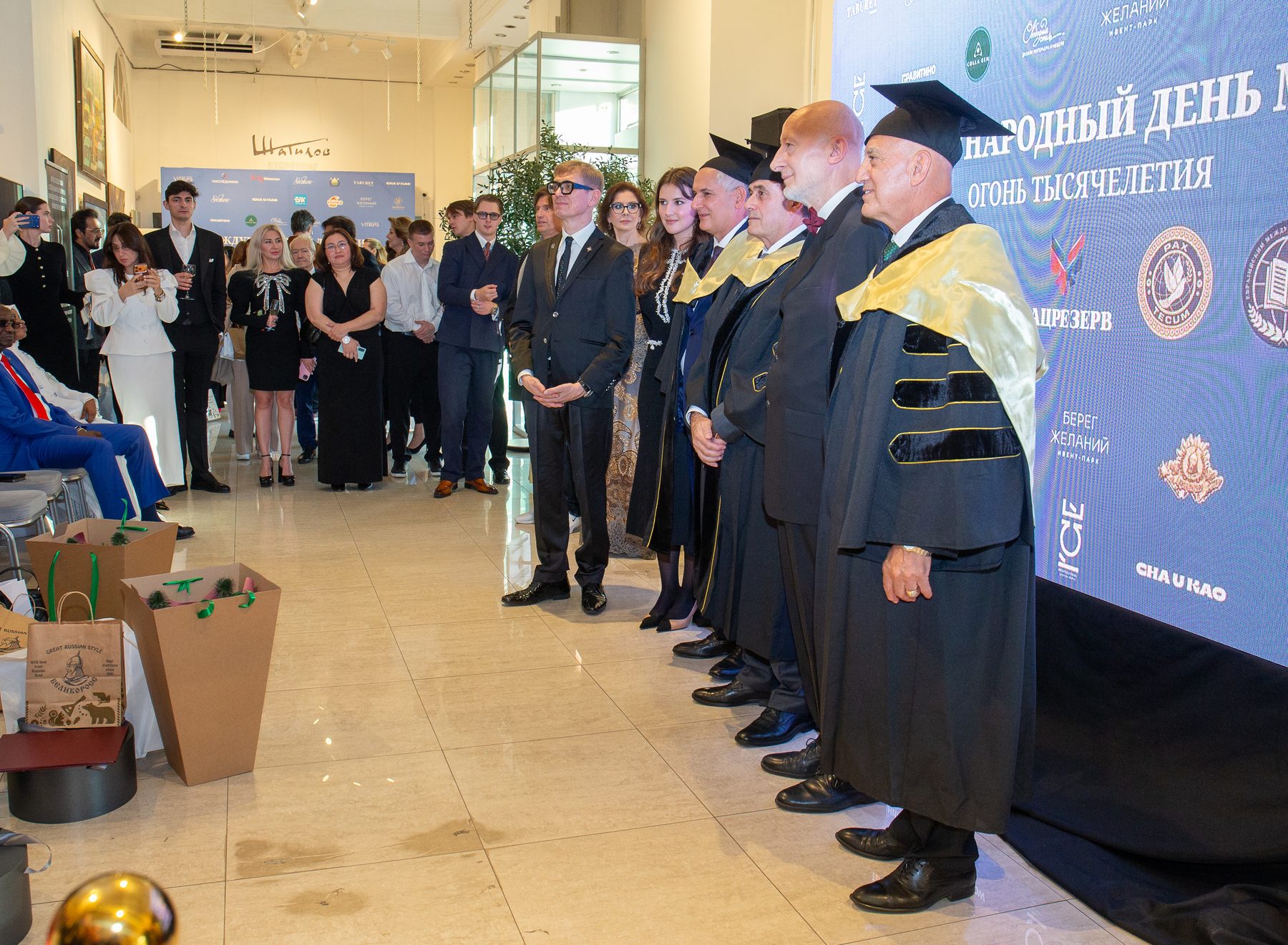
An important part of the programme was a ceremony conducted by Konstantin Klimenko, Rector of Eurasian International University, during which honorary doctoral degrees were awarded to representatives of the Arab diplomatic community.
The honorary titles were presented to:
H.E. Toufik Jouamaa, Ambassador Extraordinary and Plenipotentiary of the People’s Democratic Republic of Algeria to the Russian Federation;
H.E. Abdul-Karim Hashim Mustafa, Ambassador Extraordinary and Plenipotentiary of the Republic of Iraq to the Russian Federation;
and Waleed Hamid Shiltagh, Head of the Representation and Ambassador of the League of Arab States in Russia.
The programme also included representatives of African diplomacy, further expanding the international character of the Moscow gathering.
PAX TECUM awards
A special part of the forum was the ceremonial presentation of awards of the Worldwide Charitable Alliance “Peacemaker.”
For PAX TECUM, an award is not merely a commemorative distinction.
It represents public recognition of people whose work contributes to creation, culture, social responsibility and the ideals of peace.
By decision of the International Coordination Council, the following laureates were honoured:
Alexey Vladimirovich Minaev — the Talent and Vocation Medal, for contribution to peace.
Polina Konstantinovna Iordanova — the Talent and Vocation Medal, for contribution to peace.
Irina Alexandrovna Artemyeva — the Peacemaker Star, for contribution to peace.
Alexey Sergeevich Syrkin — the Peacemaker Star, for contribution to peace.
Garegin Grishaevich Papyan — the Golden Peacemaker Order, for contribution to peace.
Elena Alexandrovna Kalinina — the Gold Medal of Talent and Vocation.
The awards reflect the central philosophy of PAX TECUM:
peace is created not only through declarations.
It is created through people.
Through professional work.
Through creativity.
Through education.
Through responsibility.
Through the daily choice to build rather than destroy.
PAX TECUM: recognition and responsibility
For the Worldwide Charitable Alliance “Peacemaker,” recognition is not the end of a person’s path.
It is also a reminder of responsibility.
An award does not simply say:
“Your achievements have been recognized.”
It also says:
“What you do matters to other people.”
This is the deeper meaning of the PAX TECUM tradition.
The laureates may come from different professions, generations and backgrounds.
What connects them is the idea of creation.
Peace does not appear by itself.
It grows from millions of human decisions to choose cooperation over destruction, respect over hostility and responsibility over indifference.
The “Millennium Fire” as a symbol of the future
The title of the forum became a metaphor for the entire gathering.
Fire can destroy.
But fire can also illuminate.
It can give warmth.
It can bring people together.
It can be passed from one person to another.
This is how the organizers understand the “Millennium Fire” — as a symbol of a new culture of international dialogue, where peace is not understood merely as the absence of conflict, but as a conscious and continuous act of creation.
The timing was especially symbolic.
The declaration was signed in Moscow on 20 September 2026, immediately before the world marked the United Nations International Day of Peace.
From Moscow, an appeal was addressed to the international community and the BRICS world:
the future cannot be built through permanent confrontation.
It can only be built through dialogue.
Through culture.
Through education.
Through mutual respect.
Through responsibility.
And through people capable of transforming these principles into real action.
PAX TECUM.
Peace be with you.